

Building Smarter Real Estate: Technologies Driving Efficiency, Security, and Resident Experience
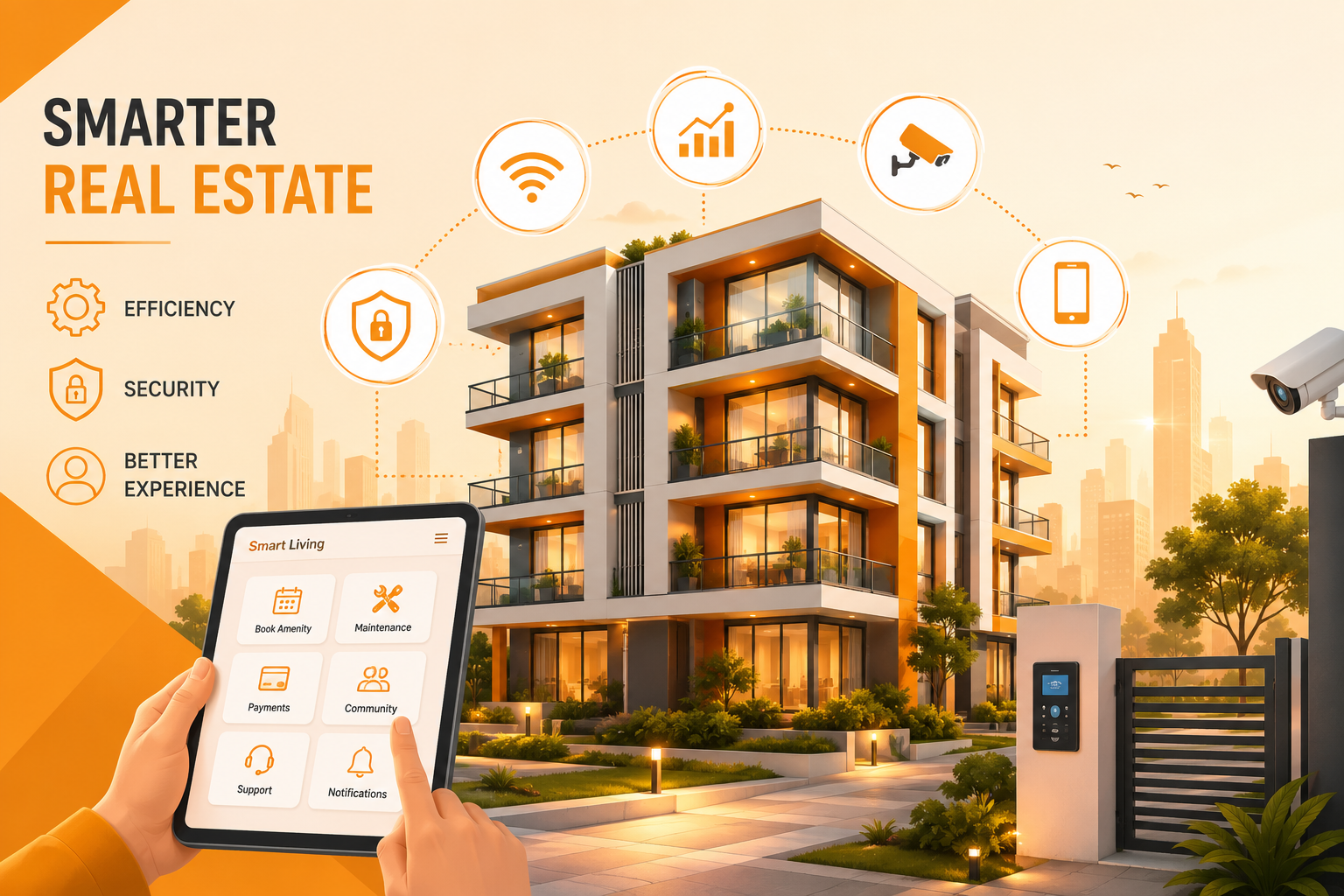
In today's real estate industry, technology continues to reshape how properties are managed, operated, and experienced. Today's residents expect convenience, connectivity, and seamless digital interactions, while property managers and developers are looking for smarter ways to improve efficiency and reduce operational complexity.
As a result, smart real estate has evolved from a competitive advantage into a business necessity. From AI-driven support systems to digital property management platforms, technology is becoming the foundation of successful real estate operations.
The Evolution of Smart Real Estate
A smart property is no longer defined solely by connected devices or automated lighting systems. Modern smart real estate combines digital infrastructure, automation, data analytics, and resident-focused services to create a more efficient ecosystem.
Property owners and developers are investing in technologies that simplify operations, provide greater visibility into property performance, and improve communication with residents.
The focus has shifted from simply managing buildings to creating intelligent, connected communities.
How Automation Enhances Operational Efficiency
One of the most significant benefits of smart real estate technology is operational efficiency.
Many daily property management tasks involve repetitive processes that consume valuable time and resources.
- Automation enables property managers to streamline activities such as maintenance requests, service tracking, payment collection, resident communication, and reporting.
- Instead of relying on manual workflows, teams can use centralized platforms to manage operations from a single interface.
- Solutions like BOYOT help property managers automate key processes, reducing administrative workloads while improving response times and service quality.
- This allows teams to focus on strategic initiatives rather than routine operational tasks.
Strengthening Property Security with Technology
Security remains one of the top priorities for residential and commercial developments.
Digital visitor management systems, smart access control solutions, mobile-based entry permissions, and real-time monitoring tools are transforming how communities manage security. These technologies provide greater visibility while reducing reliance on manual processes.
By integrating security functions into a centralized property management platform, organizations can improve coordination, maintain accurate records, and respond more efficiently to security-related events.
As smart communities continue to grow across the region, technology-driven security solutions are becoming a standard expectation rather than a luxury feature.
Elevating the Resident Experience
Resident expectations have changed dramatically over the past few years. Convenience, transparency, and instant access to information now play a major role in resident satisfaction.
Modern property technology enables residents to submit maintenance requests, make payments, access important documents, receive community updates, and communicate with management teams through a single digital platform.
AI-powered assistants are also becoming increasingly valuable. Residents can receive immediate answers to common questions, access property information, and resolve routine inquiries without waiting for office hours.
BOYOT's AI-powered capabilities and resident portal features help create a seamless digital experience, improving engagement while reducing the burden on property management teams.
The Future of Connected Communities
As smart city initiatives continue to expand across Egypt and the Gulf region, connected communities will play an increasingly important role in the future of real estate. Developers and property managers are recognizing that technology is no longer an optional investment, it is a critical component of sustainable growth and operational success.
Platforms like BOYOT are helping real estate organizations embrace this transformation by bringing property management, resident engagement, payments, maintenance, and AI-powered support into a single integrated solution.
The result is a smarter approach to real estate management that benefits property owners, managers, and residents alike.
Conclusion
The future of real estate is being shaped by technologies that enhance efficiency, strengthen security, and improve the resident experience. From automation and AI to digital property management platforms and data-driven insights, smart real estate is transforming how properties operate and how communities thrive.
For developers and property managers looking to remain competitive in an increasingly digital landscape, investing in smart property technology is no longer just an innovation strategy, it is a business imperative.