

How AI Is Creating the Next Generation of Smart Properties
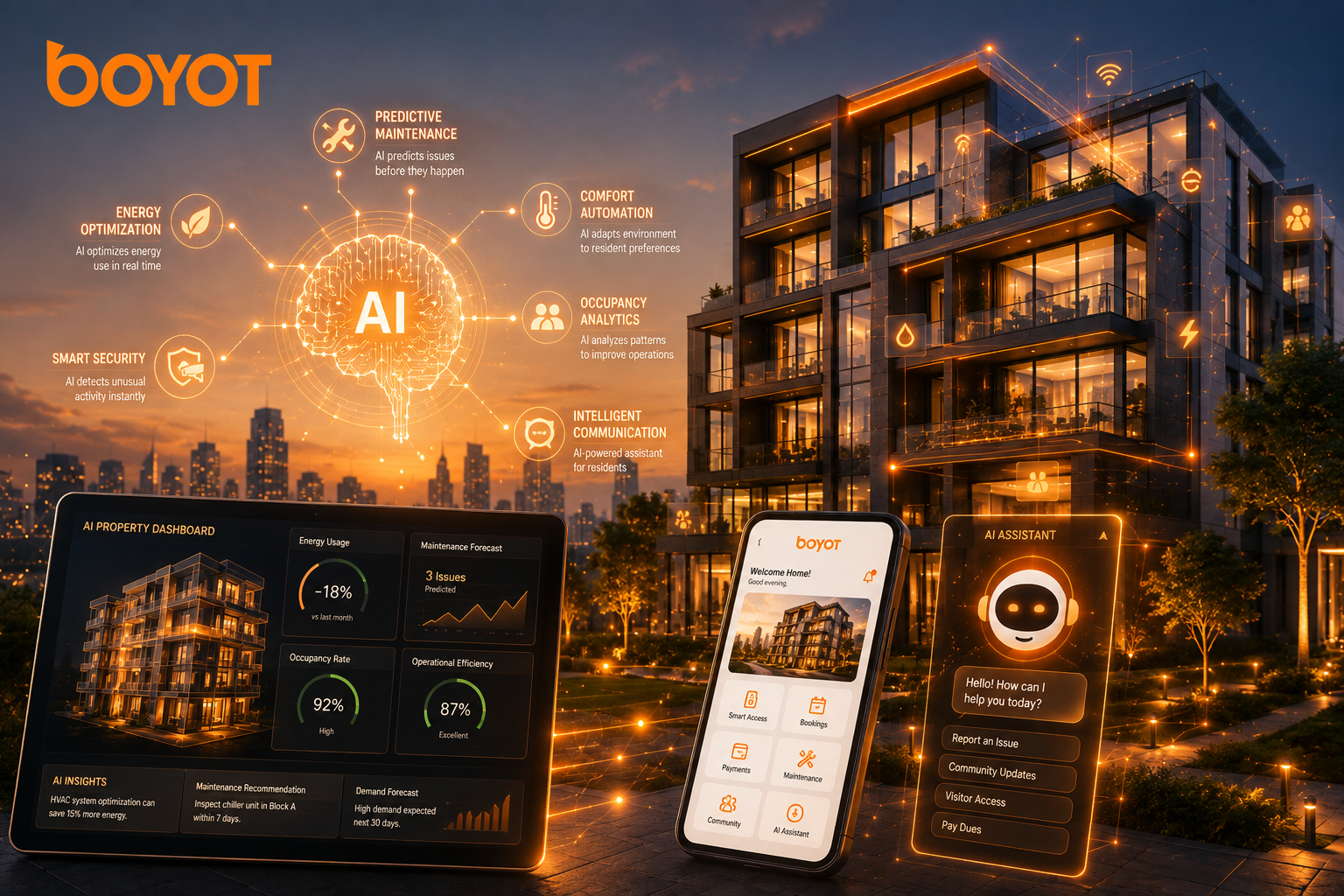
The real estate industry is entering a new era where properties are becoming more than physical spaces. With the advancement of Artificial Intelligence (AI), buildings are becoming increasingly intelligent, connected, and capable of responding to the needs of owners, property managers, and residents.
While traditional smart properties rely on connected devices and automated systems, the next generation of smart properties will use AI to understand data, identify patterns, make predictions, and support better decisions. This transformation is particularly relevant as real estate markets across Egypt and the wider GCC continue to invest in modern residential and mixed-use developments.
From Smart Buildings to Intelligent Properties
A smart building can collect information through sensors and connected devices. An AI-powered property can go a step further by analyzing that information and determining what should happen next.
AI can bring together data from building systems, resident interactions, maintenance activities, occupancy patterns, and operational performance. This creates a more intelligent property ecosystem where technology does not simply respond to events but can anticipate them.
The result is a property that can continuously learn and improve its operations.
How AI Is Transforming Smart Properties
1. Intelligent Building Operations
AI can analyze information from multiple building systems to help property managers understand how a property is performing.
For example, AI can identify unusual patterns in equipment performance, energy consumption, or building activity. Instead of requiring managers to manually review large amounts of information, intelligent systems can highlight areas that may require attention.
This gives property teams greater visibility into the overall health of their properties.
2. Smarter Energy Management
Energy efficiency is becoming increasingly important for modern buildings, particularly in regions such as Kuwait and the GCC where cooling systems can represent a significant operational requirement.
AI can analyze factors such as occupancy, usage patterns, weather conditions, and historical consumption to help optimize energy usage.
Rather than operating building systems according to fixed schedules, intelligent systems can adapt based on actual conditions, potentially reducing unnecessary consumption and operating costs.
3. Predicting Property Performance
AI can turn historical property data into forward-looking insights
Property owners can use intelligent analytics to understand patterns related to occupancy, service demand, operational costs, and property performance.
This can help decision-makers identify trends earlier and make more informed choices about resources, investments, and property operations.
4. More Personalized Resident Experiences
The next generation of smart properties will increasingly focus on personalization.
AI can analyze preferences and interactions to help create more convenient experiences for residents. From personalized notifications to intelligent recommendations and automated assistance, technology can make property services more relevant to individual users.
Instead of providing the same digital experience to everyone, AI can help create a more responsive and personalized environment.
5. Intelligent Security and Access
AI can also contribute to smarter property security.
Connected access systems can work alongside intelligent analytics to identify unusual activity, recognize patterns, and support property teams in monitoring access across large developments.
Combined with digital visitor management and connected devices, AI can help create safer and more efficient property environments without adding unnecessary complexity for residents.
6. Creating a Connected Property Ecosystem
One of the biggest opportunities presented by AI is the ability to connect different aspects of property operations.
Building systems, resident services, payments, maintenance, communication, and property data can operate as parts of a wider digital ecosystem.
This interconnected approach gives property managers a more complete view of their communities and allows technology to support decisions across multiple areas rather than operating individual systems in isolation
How BOYOT Supports the Future of Intelligent Properties
BOYOT is designed to help property owners, developers, and managers move toward a more connected and intelligent approach to real estate management.
Through its property and community management ecosystem, BOYOT brings important operational functions together in one platform. Its AI-powered capabilities can help provide intelligent assistance, analyze property-related information, and improve how residents and management teams interact with property services.
Combined with BOYOT's mobile applications, community management tools, rental management solutions, payment capabilities, and reporting features, this creates a foundation for smarter property operations.
As AI continues to evolve, platforms like BOYOT can help real estate organizations adopt intelligent technology without having to manage disconnected systems and processes.
The Future of Smart Properties
The future of real estate will not simply be about buildings equipped with more technology. It will be about properties that can understand, learn, predict, and respond.
AI is helping move the industry from connected buildings toward intelligent properties that can improve efficiency, support better decisions, and deliver more personalized experiences.
For developers and property managers across Egypt and the GCC, adopting AI-powered real estate technology can become an important competitive advantage. The properties of the future will not just be smart, they will be increasingly intelligent, adaptive, and connected.