

The Daily Challenges Property Managers Face and Why Modern Property Management Systems Matter

In recent times, property management has evolved into a highly demanding and dynamic function. In major cities, property managers are no longer just overseeing buildings, they are managing tenants, finances, services, and performance across entire portfolios.
What used to be a relatively straightforward role has now become a continuous balancing act. Every day involves multiple moving parts, and expectations are higher than ever. Tenants expect faster service, owners expect better returns, and operations must run smoothly at scale.
This is why property management is now at the core of real estate success, not just an operational layer, but a strategic one.
The Daily Operational Pressure
A typical day in property management is filled with constant activity. Property managers must respond to tenant concerns, track payments, coordinate maintenance, and ensure that leases and contracts are up to date.
The challenge is not just the volume of tasks, but the need to handle them simultaneously. A delay in one area, such as maintenance or payment tracking, can quickly impact other parts of the operation. Over time, this creates pressure that builds across the entire system.
Without a structured approach, property managers often find themselves reacting to issues rather than managing them proactively.
Where Inefficiencies Start to Build
Many of the challenges in property management do not come from a single issue, but from the accumulation of small inefficiencies. When teams rely on emails, spreadsheets, and manual tracking, information becomes scattered and difficult to manage.
This leads to situations where data is outdated, communication is delayed, and processes are inconsistent. For example, a tenant request may be logged in one system while the maintenance team is tracking it elsewhere, creating gaps in coordination.
Over time, these inefficiencies reduce visibility and make it harder to maintain control over operations. What starts as a manageable process gradually becomes fragmented and difficult to scale.
The Complexity of Managing Multiple Properties
As portfolios expand, property management becomes even more challenging. Managing a single building is one thing, but handling multiple properties across locations requires a completely different level of coordination.
In markets like Dubai, portfolios often include a mix of residential and commercial units, each with different tenant expectations and operational needs. Property managers must keep track of leases, monitor occupancy, manage service providers, and oversee financial performance across all assets.
Without the right systems in place, this complexity can quickly become overwhelming. Processes that worked for smaller portfolios begin to break down, and teams struggle to maintain consistency.
Why Systems Are Becoming Essential
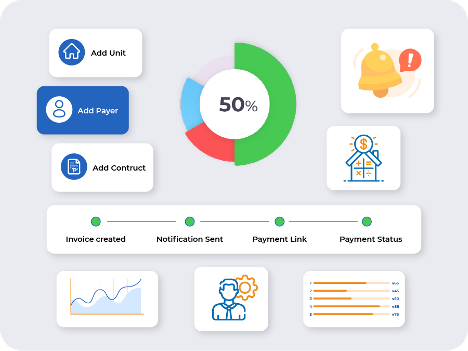
To handle these growing demands, property management is shifting toward a more structured, system-driven approach. Instead of relying on manual coordination, companies are adopting platforms that centralize operations and provide real-time visibility.
Systems play a critical role in organizing data, automating routine tasks, and ensuring that processes are followed consistently. They allow property managers to move from reactive problem-solving to proactive management.
Some of the key benefits include:
- Better organization of tenant, lease, and financial data
- Faster response times to tenant requests
- Improved tracking of payments and operational tasks
- Greater visibility into overall portfolio performance
By bringing everything into one place, systems reduce complexity and make it easier to manage operations at scale.
Moving Toward Smarter Property Management
The role of property management is changing. It is no longer just about handling daily tasks, it is about optimizing performance, improving tenant experience, and maintaining long-term value.
This shift requires a different way of working. Property managers need tools that support efficiency, provide insights, and allow them to stay in control even as portfolios grow.
In the GCC, this transformation is already underway. Companies that adopt structured systems are better equipped to handle complexity and deliver consistent results.
How Boyot Supports Modern Property Management
At Boyot, we understand the realities of modern property management and the challenges that come with it. Our platform is designed to simplify operations by bringing all aspects of property management into one centralized system.
With Boyot, property managers can manage leases, track payments, handle maintenance requests, and monitor performance, all from a single platform. This reduces the need for multiple tools and eliminates the inefficiencies caused by fragmented systems.
By improving visibility and streamlining workflows, Boyot enables property management teams to operate more efficiently and focus on delivering better outcomes.
Conclusion
Property management today is more complex and demanding than ever. Daily challenges, from tenant communication to financial tracking, require a structured and scalable approach.
Without the right systems, inefficiencies build up and operations become difficult to manage. With the right platform, property management becomes more organized, proactive, and effective.
As the GCC real estate market continues to grow, the importance of strong, system-driven property management will only increase.